
Last Updated: 26 October 2026
Quick Summary
Artisan chocolate expensive because artisanal producers prioritise quality ingredients, small-batch production, and meticulous craftsmanship rather than optimising for volume and cost efficiency like mass producers. Single-origin cocoa, higher cocoa butter content, and hand-tempered methods drive up production costs, with artisan bars typically priced £5-£15 per 100g compared to £0.50-£2 for mass-produced alternatives.
- Artisan chocolate uses single-origin cocoa from traceable farms versus bulk commodity blends in mass production
- Artisanal makers employ small-batch, hand-tempered production methods instead of continuous automated lines
- Artisan bars contain real vanilla and cocoa butter without lecithin or artificial flavours
- Quality control involves per-batch tasting and adjustment rather than statistical sampling
- Artisan chocolate has a shorter shelf life of 6-12 months due to higher cocoa butter content
Table of Contents
- Why Artisan Chocolate Is Expensive: The Cost Breakdown
- What Does Artisan Chocolate Mean
- Artisan Chocolate vs Mass-Produced Chocolate
- How to Taste Artisan Chocolate
- How to Store Artisan Chocolate
- Exploring Sabor's Curated Collections
- Frequently Asked Questions
Why Artisan Chocolate Is Expensive: The Cost Breakdown
Artisan chocolate costs significantly more than mass-produced alternatives because it's made with fundamentally different priorities. Where industrial chocolate makers optimise for volume and shelf stability, artisanal producers prioritise quality ingredients, small-batch production, and meticulous craftsmanship.
What Does Artisan Chocolate Mean
Artisan chocolate is chocolate crafted in small batches using high-quality ingredients, typically by skilled makers who control each stage of production from bean selection through final packaging. The defining characteristic isn't a legal standard, there's no official certification, but rather an approach: artisanal producers choose methods and materials based on quality rather than cost efficiency.
This distinction matters because the term "artisan" carries no regulatory weight. Some mid-sized companies use the label to describe chocolate that isn't necessarily made in small batches, as The Chocolate Journalist's analysis of confusing chocolate terminology notes when examining how the industry applies such labels. The real difference lies in decision-making: an artisan maker asks "What's the best ingredient for this bar?" while a mass producer asks "What's the cheapest ingredient that meets minimum standards?"
Artisan chocolate typically means single-origin cocoa (from one specific region or farm), higher cocoa butter content, real vanilla instead of vanillin, and the absence of lecithin or other emulsifiers designed to extend shelf life. It means smaller production runs that allow makers to adjust recipes based on seasonal variations in cocoa quality. For Sabor Chocolates, this philosophy extends to our curated collections, best artisan chocolates a guide to luxury flavours deepens what qualifies as truly artisanal and why those standards matter to flavour.
Artisan Chocolate vs Mass-Produced Chocolate
Research on premium chocolate consumer understanding published in PLOS ONE examined how consumers perceive these differences, finding that awareness of production methods significantly influences purchasing decisions. Our how to choose artisanal chocolate a 2026 guide walks through the specific markers that distinguish genuine artisan work from marketing language.
| Factor | Artisan Chocolate | Mass-Produced Chocolate |
|---|---|---|
| Cocoa sourcing | Single-origin, traceable farms | Bulk commodity blends |
| Ingredients | Cocoa butter, vanilla, cocoa solids | Palm oil, lecithin, artificial flavours |
| Production method | Small-batch, hand-tempered | Continuous, automated lines |
| Quality control | Per-batch tasting and adjustment | Statistical sampling |
| Shelf stability | 6-12 months | 18-24 months |
| Price point | £5-£15 per 100g bar | £0.50-£2 per bar |
How to Taste Artisan Chocolate
A 2024 study on artisan chocolate and sustainable cocoa farming published in the International Journal of Food Design highlighted that artisan makers' commitment to quality extends to sourcing practices that support sustainable cocoa production.
How to Store Artisan Chocolate
Storage conditions directly affect how long artisan chocolate retains its quality, and they're more demanding than storage for mass-produced alternatives. Artisan chocolate's higher cocoa butter content makes it sensitive to temperature fluctuations and humidity.
Exploring Sabor's Curated Collections
Our collections include a range of flavour profiles.
The Garden is white chocolate with raspberry and pistachio. The Apiary is milk chocolate with honeycomb and sea salt. The Orchard is dark chocolate with sour cherry and toasted almond. The Grove is milk chocolate with a selection of fruits and nuts.
Each bar costs £6.95.
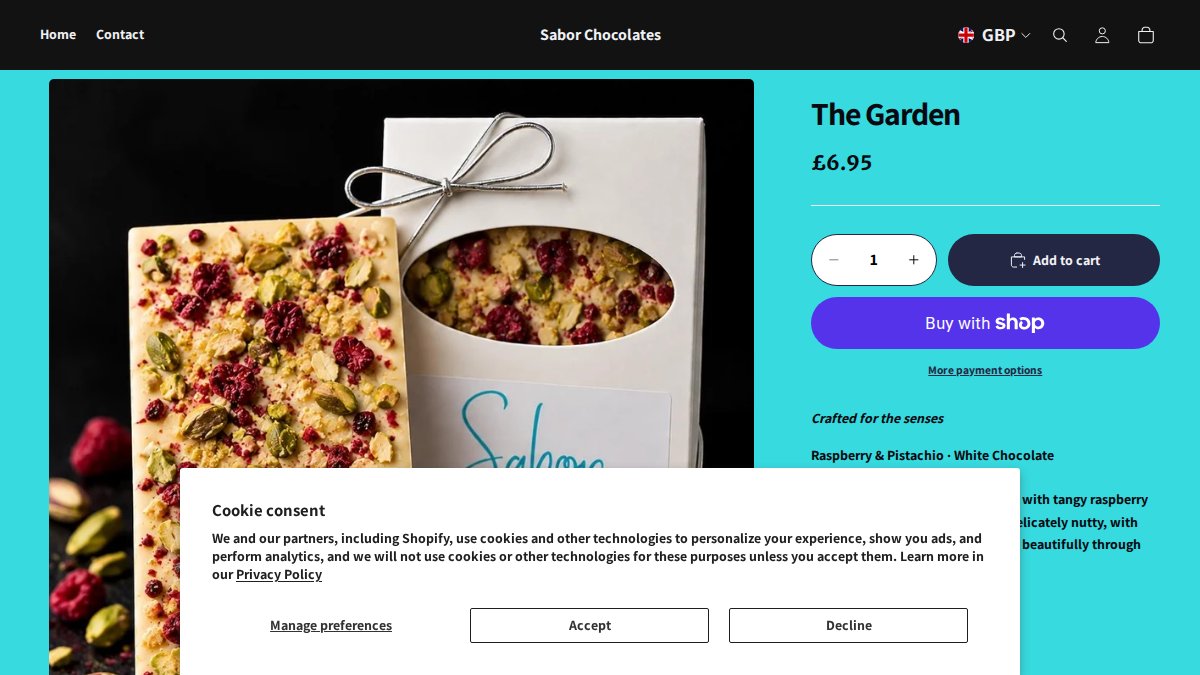
Sabor Chocolates offers curated collections and seasonal specialities. THE SABOR COLLECTION features a range of chocolate collections.
Sabor Chocolates specialises in artisanal chocolates, with curated seasonal collections and diverse flavour profiles including The Garden, The Apiary, and The Orchard. Explore Sabor Chocolates' curated collections.
Frequently Asked Questions
Why is artisan chocolate expensive compared to supermarket chocolate?
Artisan chocolate is expensive because it uses premium, single-origin cocoa beans, minimal additives, and hand-crafted production methods. Small-batch makers invest in quality control and sustainable sourcing, which increases costs. Mass-produced chocolate uses cheaper bulk cocoa, fillers, and automated processes that lower prices but compromise flavour and texture. The price difference reflects genuine differences in ingredients, labour, and production philosophy rather than packaging alone.
What does artisan chocolate mean exactly?
Artisan chocolate means small-batch chocolate made by skilled craftspeople using traditional methods and high-quality ingredients. However, the term lacks strict legal definition, so some mid-sized producers use it loosely. True artisan makers typically source single-origin cocoa, control fermentation and roasting, and experiment with flavour combinations. They prioritise taste and technique over volume, resulting in distinct flavour profiles and limited quantities. When buying, look for transparency about sourcing and production methods.
Is artisan chocolate worth the extra cost?
Whether artisan chocolate is worth it depends on your priorities. If you value complex flavours, ethical sourcing, and unique taste experiences, the investment pays dividends. Artisan chocolate delivers noticeably superior flavour depth and texture compared to mass-produced alternatives. For special occasions, gifts, or regular indulgence, many find the quality justifies the price. However, if you simply want sweet chocolate without caring about origin or craftsmanship, mass-produced options may suit you better.
How should I store artisan chocolate to keep it fresh?
Store artisan chocolate in a cool, dark place between 15-17°C, away from direct sunlight and strong odours. Use an airtight container to prevent moisture and humidity damage. Avoid refrigeration unless your home is very warm; condensation can cause blooming (white spots). Keep chocolate away from strong-smelling foods, as it absorbs odours easily. Properly stored, artisan chocolate keeps for 6-12 months, though most is best enjoyed within a few weeks of purchase for optimal flavour and texture.
